Do People Who Log Their Meals Lose More Weight? The Science of Food Diaries
The PlateMetric AI team ·

Yes, research consistently points that way. Recording what you eat is one of the strongest parts of weight-loss programs. What matters most is not perfect records but logging often and consistently.
A 1,700-person study: loggers lost twice as much
In a weight-loss trial run by Kaiser Permanente researchers and published in the American Journal of Preventive Medicine, nearly 1,700 participants were followed for six months. The best predictors of weight loss were how often people kept a food diary and how many support sessions they attended. People who kept daily food records lost about twice as much weight as those who kept none.
Source: Hollis et al., Am J Prev Med, 2008. Daily loggers ≈ 2×.
Not just one study: a systematic review
A 2011 systematic review by Burke and colleagues at the University of Pittsburgh examined 22 studies from 1993–2009: 15 on food records, 1 on exercise logs and 6 on regular self-weighing. It found a consistent, significant relationship between self-monitoring and weight loss. The authors also note that most studies used similar participant groups, so the level of evidence is limited.

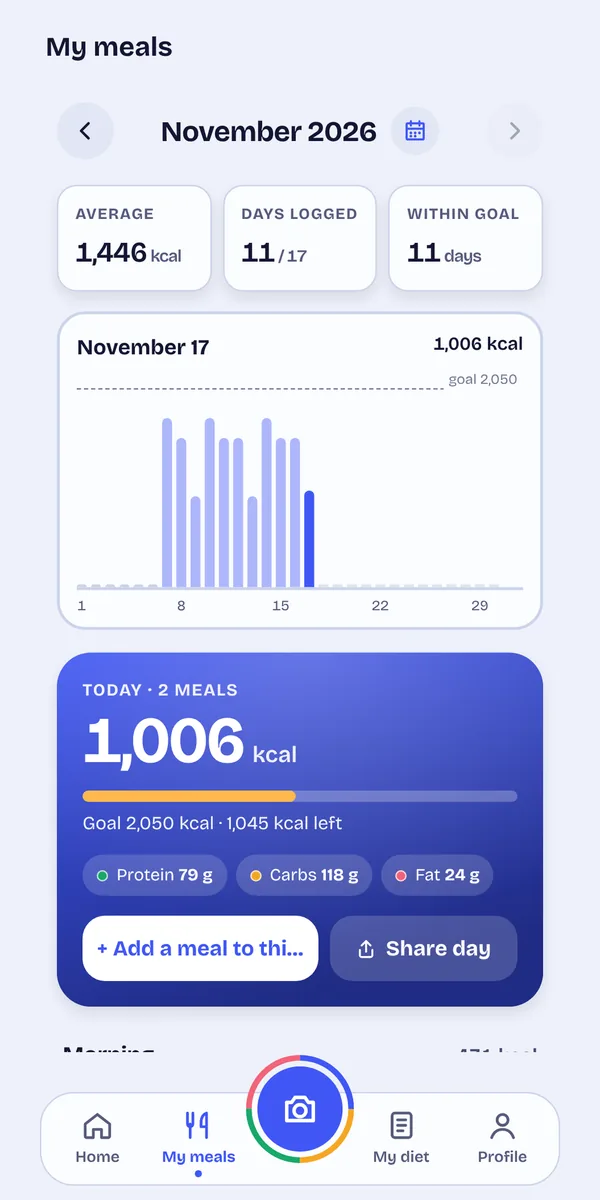
Snap a photo: every food, its grams and calories, listed separately. Fix the grams in one tap.

Consistent beats perfect
In a 2021 study of adults logging in an app, what was linked to weight loss was how often they logged; the number of weeks with complete records made no significant difference. The authors suggest emphasising frequency and consistency to make logging less of a burden.
How long does it take? In a 142-person University of Vermont study published in Obesity, participants spent an average of 23 minutes a day logging in the first month and about 15 minutes by month six. What was most strongly linked to weight loss was not the time spent but how often they logged. What makes logging hard is usually not the time, but keeping the habit going.
How to keep the logging habit
Snapping the plate instead of typing takes seconds.
Before or right after eating; logs left for the evening get forgotten.
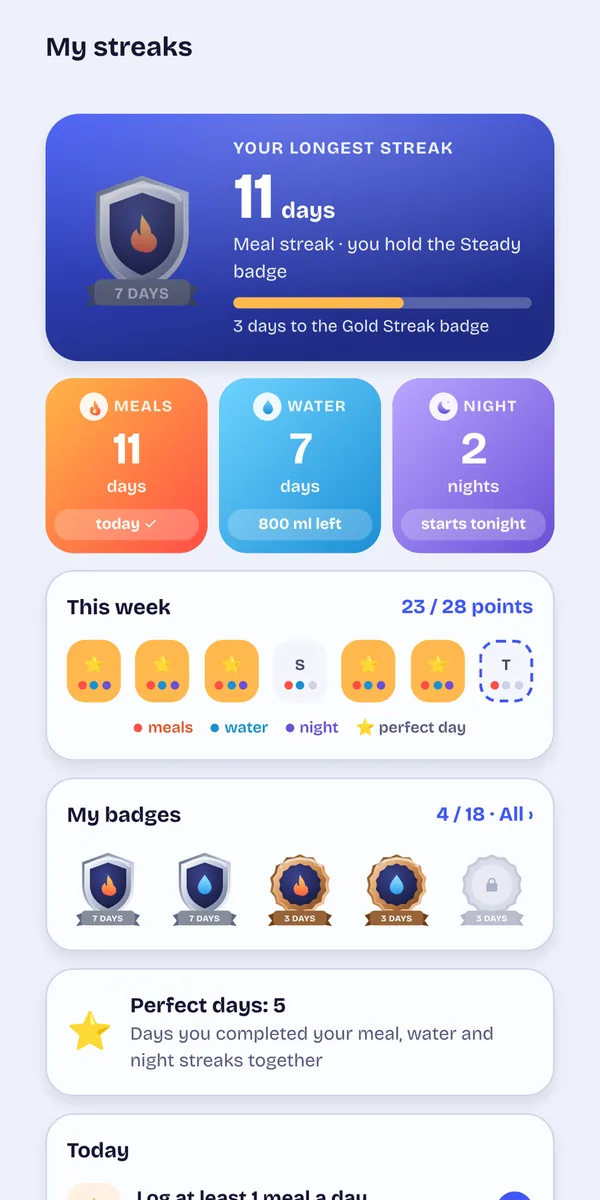
Seeing consecutive days makes it easier to keep going.
One gap doesn’t break the habit; not starting again the next day does.
References
- Hollis JF, Gullion CM, Stevens VJ et al. Weight loss during the intensive intervention phase of the weight-loss maintenance trial. Am J Prev Med. 2008;35(2):118–126. Source →
- Burke LE, Wang J, Sevick MA. Self-monitoring in weight loss: a systematic review of the literature. J Am Diet Assoc. 2011;111(1):92–102. Source →
- Payne JE, Turk MT, Kalarchian MA, Pellegrini CA. Adherence to mobile-app-based dietary self-monitoring—Impact on weight loss in adults. Obes Sci Pract. 2022;8(3):279–288. Source →
- Harvey J, Krukowski R, Priest J, West D. Log often, lose more: electronic dietary self-monitoring for weight loss. Obesity. 2019;27(3):380–384. Source →
This article is for information only and is not medical or dietary advice. Talk to your doctor or dietitian about decisions that concern your health.
Up next

Why Do You Weigh More in the Evening? The Science of Daily Weight Changes
69 kg in the morning, 70 in the evening: did you gain fat, or is it normal? We explain, with research, why weight moves during the day and week and how to weigh yourself properly.
Read article
Does Eating Late Make You Gain Weight? What Research Says About Meal Timing
Does it matter if you eat the same calories later in the day? From a 420-person study in Spain to a tightly controlled Harvard experiment, here’s how meal timing affects weight.
Read article