Why Do You Weigh More in the Evening? The Science of Daily Weight Changes
The PlateMetric AI team ·

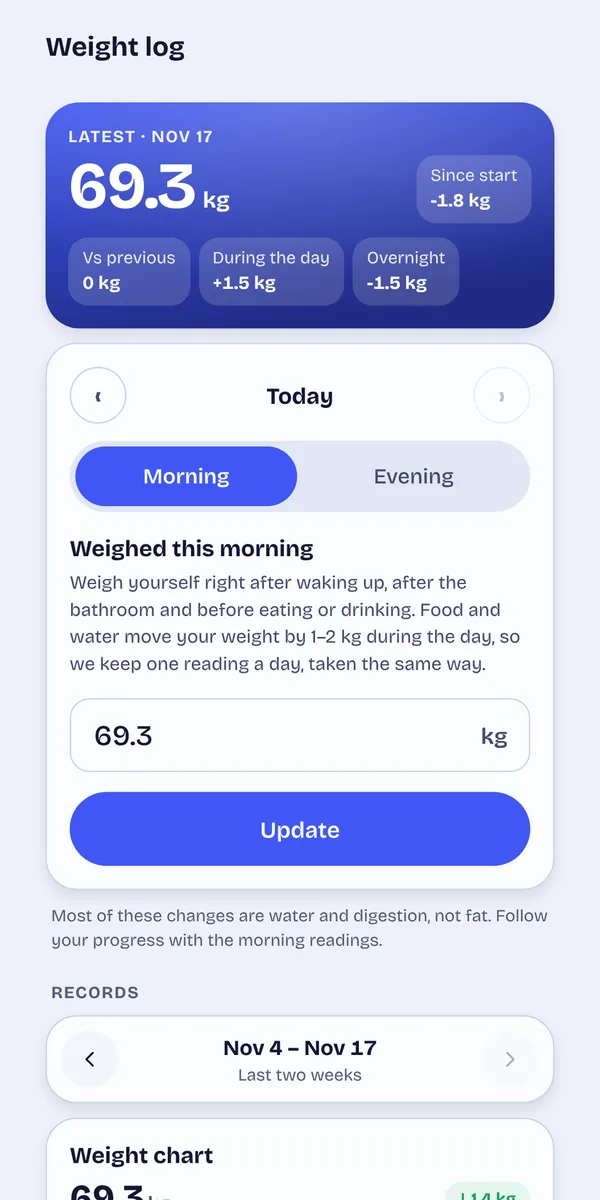
The extra weight in the evening is mostly not fat; it’s the food, drink and water your body is holding from the day. To see where your weight is really heading, weigh yourself under the same conditions every day (morning, after the bathroom, before breakfast) and look at the weekly trend rather than a single day.
What changes during the day?
A scale shows the weight of everything in your body at that moment: food in your stomach, the water you drank, gut contents and fluid held in your tissues. A litre of water weighs about a kilogram, and what you ate and drank during the day hasn’t been digested and excreted yet, so your evening weight is naturally higher. Overnight you lose water through breathing and sweat and don’t eat or drink, so the morning reading is usually the lowest and most consistent of the day.
A salty or carbohydrate-heavy dinner can make your body hold more water. That’s often why the scale is up the next morning; fat builds up from extra energy over days, not in a few hours.
Even morning weight moves
Even under the same conditions, weight changes a little every day. In a US Army study that weighed 65 active men every morning while they exercised in the heat and replaced the fluid they sweated out, weight varied by an average of 0.51 kg from one day to the next. A half-kilo rise on its own tells you very little.
In 65 active men weighed every morning under the same conditions.
Source: Cheuvront et al., Int J Sport Nutr Exerc Metab, 2004.

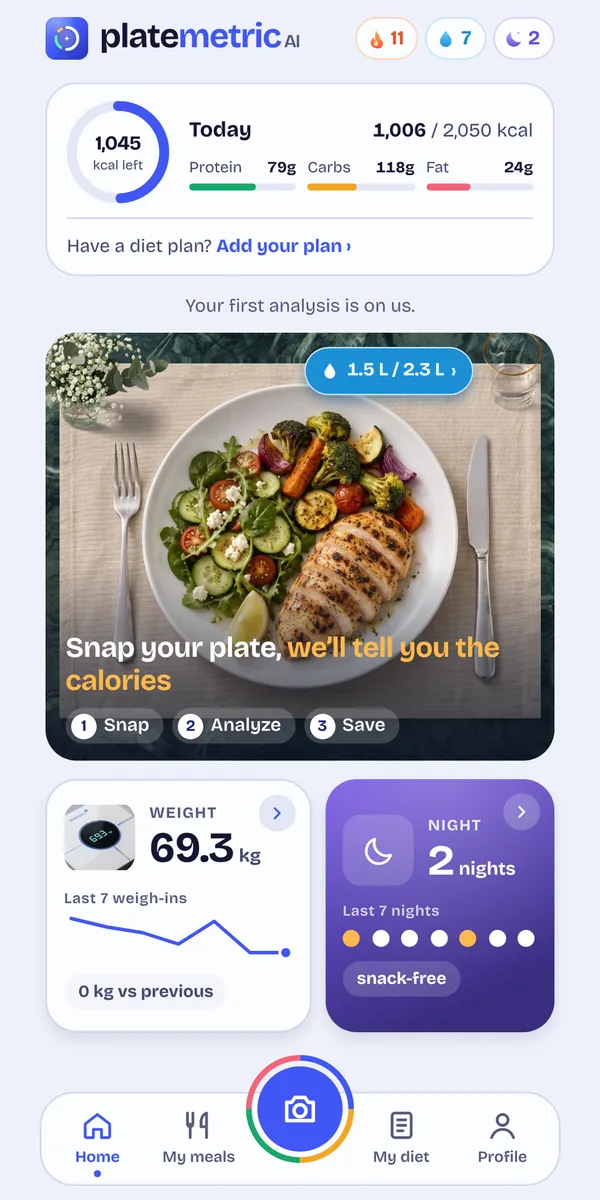
Snap a photo: every food, its grams and calories, listed separately. Fix the grams in one tap.

The week has a rhythm too
In the European NoHoW study, which analysed smart-scale data from more than 1,400 people who had lost weight, weight moved by about 0.35% within the week: up at the weekend, back down on weekdays. For a 70 kg person that’s roughly 250 grams. In the same study, weight rose by an average of 1.35% over Christmas and did not fully come back down, so lasting gains tend to build up around long holidays.
Sources: Cheuvront et al., 2004; Turicchi et al., PLoS ONE, 2020. Percentages converted to kg for 70 kg.
How to weigh yourself properly
Morning, after the bathroom, before breakfast, similar clothes.
Follow the weekly average or the last two weeks’ chart.
A rise the next morning is often water retention.
Compare an evening reading with other evening readings, not with the morning.
Small swings on the scale are normal. What matters is where a few weeks of morning readings are heading.
References
- Cheuvront SN, Carter R, Montain SJ, Sawka MN. Daily body mass variability and stability in active men undergoing exercise-heat stress. Int J Sport Nutr Exerc Metab. 2004;14(5):532–540. Source →
- Turicchi J, O’Driscoll R, Horgan G et al. Weekly, seasonal and holiday body weight fluctuation patterns among individuals engaged in a European multi-centre behavioural weight loss maintenance intervention. PLoS ONE. 2020;15(4):e0232152. Source →
This article is for information only and is not medical or dietary advice. Talk to your doctor or dietitian about decisions that concern your health.
Up next

Does Eating Late Make You Gain Weight? What Research Says About Meal Timing
Does it matter if you eat the same calories later in the day? From a 420-person study in Spain to a tightly controlled Harvard experiment, here’s how meal timing affects weight.
Read article
How Much Water Should You Really Drink a Day? The Truth Behind the 2–2.5 Litre Rule
Where does “8 glasses a day” come from? The European Food Safety Authority’s advice, water from food and what raises your needs: a research-based look at hydration.
Read article